A Data Driven Culture Framework That Actually Changes Behavior
A data driven culture framework is not a dashboard, a data catalog, or a training program. It is the set of habits that determines whether people actually use data before important decisions.
Most companies that say they have a data culture have plenty of technology to prove it. Maybe they have a modern data platform, a few hundred Power BI reports, a data catalog, and an executive presentation somewhere that says the company is becoming “data driven.” All useful things. None of them prove that the culture has changed.
Here’s a simpler test. Think about the last three important decisions your leadership team made. When did the data enter the conversation? Before people formed an opinion, while they were debating the options, or after everyone had already decided and needed a chart to support it?
If the answer is mostly the third one, you don’t have a data technology problem. You have a behavior problem.
The idea behind this framework is simple: stop trying to convince the entire organization that data is important. Find problems people already care about, solve those problems visibly, and let demand for data spread from there.
What a Data Driven Culture Framework Is Actually Trying to Change
There is a big difference between an organization that uses data and an organization with a real data culture.
A company that uses data can have excellent analysts and plenty of reporting. Business teams request numbers when they need them. Dashboards get reviewed. Data engineers keep pipelines running. Everyone agrees that data is important.
Then a major decision shows up and the old operating system takes over.
The senior person has a strong opinion. Someone else has been doing this for twenty years. Another person has a spreadsheet nobody else quite understands. The meeting ends, the decision gets made, and somebody asks the analytics team to “validate the numbers.”
A real data culture looks different. Leaders ask for evidence before the decision. Teams argue about what the numbers mean instead of whether numbers should be involved at all. People point out bad data because they understand that the problem eventually lands on their side of the business too.
The difference isn’t the platform. It’s what people believe data is for.
Why a Data Driven Culture Framework Has to Move From Push to Pull
This is where I think many data culture programs go wrong.
They are built as push programs.
The Push Model
A push program starts with the data team deciding what the business needs.
We launch a data literacy program. We create a new dashboard. We announce the data catalog. We schedule a quarterly scorecard meeting. We send reminders. We track attendance. Then we wonder why half the room is answering email while we explain how important all of this is.
The problem isn’t that any of those activities are bad. The problem is that the data team has to keep supplying the energy.
Stop sending reminders and usage falls. Stop promoting the dashboard and people go back to their spreadsheets. Cancel the meetings and nobody asks where they went.
If your data team has to keep reminding people to care about data, the culture has not changed yet.
The Pull Model
A pull program starts somewhere else.
Find a problem somebody in the business already complains about. Not a problem the data team thinks they should care about. Something genuinely annoying, expensive, slow, or embarrassing.
Maybe Finance spends two days every month reconciling numbers from different systems. Maybe Supply Chain makes an important forecast with incomplete information. Maybe a sales leader has stopped trusting a dashboard because the same customer appears differently in three reports.
Solve one of those problems.
Then something useful happens. The person whose problem disappeared tells somebody else. That person has a problem too. Now the business is coming to the data team instead of the data team chasing the business.
That transition from push to pull is the center of this data driven culture framework.
Data Driven Culture Framework Step 1: Find the Champions Already There
You do not need to convert the whole company at once.
In almost every business unit there is already someone who is a little more curious about the numbers than everyone around them.
It might be the finance analyst with a model that is better than the official report. It might be the operations manager tracking metrics in Excel because the company dashboard is two weeks behind. It might be a product manager constantly asking why customers behave differently from what the team expected.
Find those people.
More importantly, treat them like partners rather than users of a service your team provides.
Show them relevant data products before the big announcement. Ask what questions they wish they could answer today but cannot. Invite them into a working session when you are solving something in their area. Give them enough access to experiment.
I would rather have four real advocates distributed across the business than forty people who completed a data literacy course and forgot about it the following week.
The advocates create something the central data team cannot manufacture on its own: credibility inside the business.
Data Driven Culture Framework Step 2: Pick Quick Wins People Can Explain
Not every quick win is equally useful.
I use four filters.
It solves a problem somebody already wants solved. You should not have to explain why the problem matters before explaining the solution.
The result becomes visible reasonably quickly. If the first proof that your data program works arrives a year from now, you have given skepticism a twelve-month head start.
The person who benefits has some organizational influence. A successful solution becomes much more useful when the person benefiting from it has colleagues who listen to them.
The improvement is easy to explain. “This used to take two days and now it takes twenty minutes” spreads much further inside a company than “we improved our enterprise semantic architecture.”
The second statement may be technically impressive. The first one gets repeated in meetings you were never invited to.
That matters because data culture grows through accumulated experiences. People start trusting the data organization after they see it make somebody’s work better, then see it happen again.
Where a Data Driven Culture Framework Usually Meets Resistance
Quick wins help with people who are already open to working differently. They do much less for the people actively resisting the change.
One mistake I see repeatedly is treating all resistance as an education problem. Someone doesn’t want to use the new data product, so we show them more data, schedule another training session, or give them another presentation.
Sometimes they understand perfectly well. They are protecting something.
The Instinct Executive
This is the leader who has twenty years of experience and a good track record. They have made hundreds of decisions without your new analytics platform, thank you very much.
If you walk in and position data as a replacement for their judgment, you have already lost.
Try something much less threatening.
Ask them to make the call they would normally make. Write it down privately. Then compare the result with what the data suggested when the outcome becomes known.
No public scoreboard. No attempt to prove them wrong.
Now data is helping them calibrate an instinct they already value rather than telling them their experience is obsolete.
That small framing change matters.
The Burned Skeptic
This person is different.
They believed the last transformation program. They attended the steering committee. They defended the budget. They told their team the new system was going to make things better.
Then it didn’t.
So now your enthusiasm sounds suspiciously familiar.
Do not pretend the history never happened. Name it.
“The last attempt didn’t deliver what we promised. Here is what is different this time. Let’s test one use case for ninety days, define what success looks like now, and agree in advance that we stop if it doesn’t work.”
You are not asking them to believe again. You are giving them a safe way to test whether this attempt deserves belief.
The Data Hoarder
This one is more interesting.
Somewhere in the company is a person whose spreadsheet is unofficially more important than the official system. Everyone comes to them when they need the real number. They know which fields are wrong, which customer names are duplicates, and which report can actually be trusted on the third business day of the month.
Then the data team arrives talking about standardization and self-service.
From your perspective, you are improving access. From their perspective, you may be deleting the thing that made them valuable.
If you route around them, you create an enemy who knows your data better than you do.
A better move is to turn informal ownership into formal ownership. Make them a steward of the domain they already understand. Bring their knowledge into the governed system. Give the expertise somewhere legitimate to live.
This is why resistance to data culture is often less about data than it appears. It can be about history, identity, or status. Better dashboards do not solve those problems.
The 18 to 24 Month Data Driven Culture Framework
I would not plan a serious culture change as a ninety-day program.
My working model is roughly 18 to 24 months, because the behavior you are trying to change took years to form. I break that period into phases.
Months 0 to 6: Find Problems and Champions
Do not start by trying to change everyone.
Spend this period talking to business teams, finding the people who are already analytically curious, and identifying painful problems that can produce visible wins.
Your measure of progress is not how many people attended training. It is whether a few people in the business can point to something your data team changed and say, “That made my job better.”
Months 6 to 12: Spread From Champions to Teams
By now, your early champions should have stories to tell.
This is where you make it easier for the people around them to follow. Improve access. Reduce the wait for common questions. Give analytical users enough freedom to answer routine questions without submitting a ticket every time curiosity strikes.
You are still not trying to win an argument about data culture.
You are making the data-supported way of working easier than the old way.
Months 12 to 24: Make Data the Default
This is where the interesting behavioral signals start appearing.
Business teams include measurement in project proposals without being asked. Leaders request data before making a major decision rather than after. Someone in Operations reports a data-quality problem because they want it fixed, not because a governance policy told them to log a ticket.
The data team also gets a new problem: demand.
Business teams start asking questions faster than the central team can answer them. That capacity problem can be frustrating, but it is a much healthier problem than trying to convince people to use something they do not want.
You have moved from pushing data into the organization to the organization pulling data from you.
How Do You Know the Data Driven Culture Framework Is Working?
Do not measure culture by how often people say “data driven.”
Measure behavior.
Look at voluntary adoption. Are business teams using certified datasets and shared products when they have alternatives, or do they immediately export everything back into private spreadsheets?
Watch where data enters decisions. Does analysis arrive before the decision or after it?
Notice who initiates the conversation. Is your team constantly offering dashboards to the business, or are business leaders arriving with questions?
Pay attention when the data is inconvenient. When the numbers contradict a senior leader’s assumption, does the discussion change or does everyone start looking for another number?
Those signals tell you much more than training attendance or dashboard logins.
The leadership side of the same question, which metrics deserve executive time, is covered in executive KPIs.
What I Would Do This Week
Start with one business unit. Pick the group where you already have a decent relationship. Trying to transform the whole company on Monday is a reliable way to have a very long Monday.
Find one champion by name. Not a role, not “Finance.” A person. Ask what question they regularly struggle to answer and what manual work they hate doing.
Pick one visible problem. Prefer something painful enough that nobody needs a presentation explaining why it matters.
Stop talking about data culture for a while. Solve the problem. Make the improvement visible. Then listen for who comes asking for the next one.
The Takeaway
A data driven culture framework should make the business need the data team less as a promoter and more as a partner.
You cannot create that by announcing a culture program. You create it by solving real problems, making the wins obvious, building advocates inside the business, and understanding what resistant people are actually protecting.
The strongest sign that it is working is almost boring. People stop talking about whether the company should be data driven. They simply start using data because that has become the easiest way to get their work done.
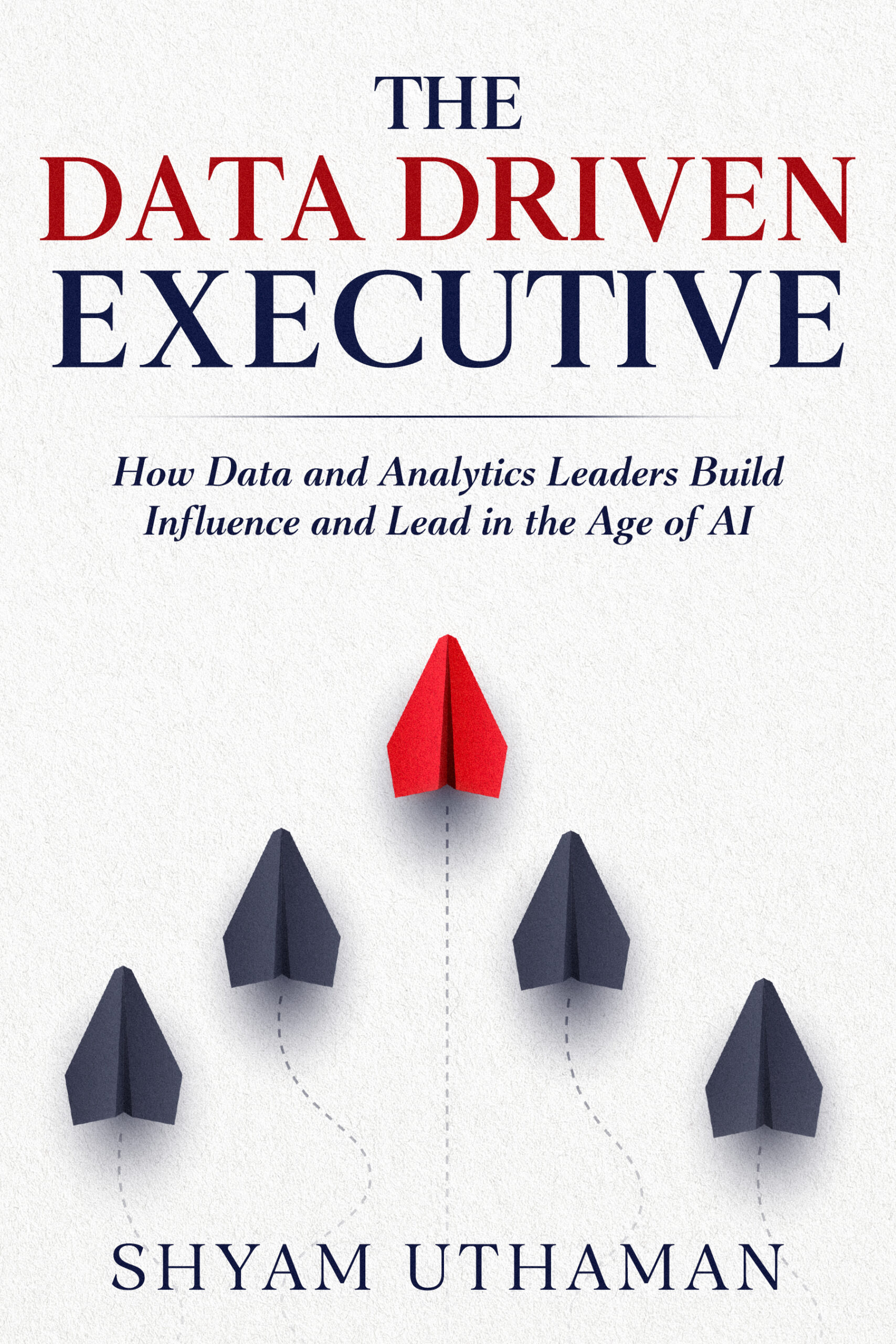
I go much deeper into this model in The Data-Driven Executive: How Data and Analytics Leaders Build Influence and Lead in the Age of AI, including the champion network, the resistance patterns, and how data leaders build influence outside their own teams. If you’re dealing with the same problem specifically around AI adoption, AI to ROI for Business Leaders covers how to move from pilots and technical success to actual business use.