How to Build a Data Team: The Roles Nobody Hires For and the Trap That Breaks Most Teams
Monday morning standup. One team member had called in sick three days that week, and the entire project had ground to a halt without him. Nobody else could interpret the model outputs. Nobody else understood how the data pipeline worked. This is the scenario that teaches most leaders how to build a data team the hard way, after the team they already built turns out to depend entirely on one person.
That’s the risk almost nobody warns you about when you’re figuring out how to build a data team. The biggest threat isn’t a bad hire or a wrong technology choice. It’s building something so dependent on individual heroics that a single resignation letter or sick week can stall the whole operation.
How to Build a Data Team Without Creating a Single Point of Failure
The instinct when building a data team is to hire the smartest people available and let expertise concentrate wherever it naturally lands. This feels efficient. It’s actually the most common way teams quietly build themselves into fragility.
One brilliant engineer can build pipelines, train models, and debug production issues faster than anyone else. That sounds like a huge win, until that person becomes the only one who can make any technical decision at all. Everyone else becomes a bystander waiting for the expert to unblock them. When that person gets overwhelmed, goes on vacation, or leaves, the whole team’s output drops to zero. Not because anyone did a bad job. Because the structure made one person irreplaceable.
The fix isn’t hiring more people. It’s restructuring around capabilities and shared understanding rather than individual expertise. Most guides on how to build a data team skip this entirely in favor of a simple hiring checklist.
The Five Roles Every Data Team Needs
Before structure, you need the right roles in the room. Most data teams accumulate the same imbalance over time: plenty of engineers, not enough of the roles that make the team useful to the business.
The data engineer builds and maintains the pipelines that move data from where it lives to where it’s needed. This is usually the first role hired, and the most over-indexed. A team of ten data engineers with nothing else produces technically sound pipelines and very little business impact.
The analytics engineer sits between raw data and the people who consume it. They build the models and semantic layer that let analysts self-serve instead of submitting tickets for every request. Most organizations under-hire this role because it sits in an awkward middle ground that neither engineering nor analytics naturally advocates for.
The data scientist builds models and runs experiments beyond what standard dashboards can show. This role is frequently over-hired relative to its actual utility in organizations that aren’t yet data-mature. A data scientist without clean, well-modeled data to work with spends most of their time cleaning data rather than doing science.
The data platform engineer owns the infrastructure everyone else runs on, the cloud environment, orchestration, access controls, cost optimization. In small teams this work gets absorbed informally. Past fifteen or twenty people, the absence of a dedicated owner becomes expensive in outages and diverted engineering time.
The Two Roles You’re Probably Missing
If you map your current team against those roles, the gaps almost always show up in the same two places.
The analytics translator is the most commonly missing role, and the one that creates the most visible gap when absent. This person speaks both languages fluently. They understand what a business unit is trying to accomplish, translate it into a data problem, and communicate results back in terms the business can act on. Being the strongest technical person on the team isn’t the requirement. Walking into any business unit meeting and being taken seriously on both sides is. Without this role, the team produces work that is technically correct and practically unused.
Platform engineering gets underinvested for a financial reason rather than a cultural one: it’s hard to show a return on investment for a role whose primary output is preventing problems. Most leaders figuring out how to build a data team wait until their first major infrastructure failure or their first cloud bill that’s double the estimate before making this hire.
How AI Has Changed Who You Should Hire
AI coding tools have genuinely reduced the time required for certain categories of data engineering work, boilerplate pipeline code, SQL generation, documentation, test scaffolding. That shift is real and it isn’t reversing.
What hasn’t changed is the need for judgment that makes technical work trustworthy. That means designing architecture that holds up as the business scales. It means evaluating whether AI-generated code is actually correct in a production context rather than just plausible-looking. And it means knowing when a data quality issue is significant enough to escalate before anyone downstream notices.
The practical implication for your next hiring cycle: weight judgment and systems thinking more heavily than raw output speed. Ask candidates how they evaluate AI-generated code, not just whether they use AI tools. The engineer who can generate code quickly but doesn’t think architecturally is more replaceable than they were two years ago. The one who can reason about tradeoffs and organizational context is more valuable than ever.
How to Build a Data Team as You Scale
The right structure depends heavily on team size, and most leaders either under-structure a small team or over-complicate a large one.
At around ten people, the team needs a clear split between people who build infrastructure and people who make it useful. A workable mix: several data and analytics engineers, one or two people focused on the modeling and semantic layer, and a data scientist. Add at least one analytics translator who serves as the primary interface with business stakeholders. That translator should handle stakeholder questions, not you.
At twenty-five people, distinct sub-groups need clear ownership. That means a platform and infrastructure group, a data products group building what the business actually consumes, and an analytics and data science group. The analytics translator role should expand into a small team of its own. At this size, you should almost never be the first point of contact when a business unit has a data question.
At fifty or more, you need managers for each sub-group and a principal-level technical leader setting architecture standards across teams. You also need a leader operating at the executive level, setting direction rather than reviewing every technical decision personally. The design question at this scale shifts to domain ownership. Which teams own which parts of the data estate, and how does shared infrastructure get governed across those domains without duplicating work?
Decision Domains: How to Build a Data Team That Doesn’t Bottleneck on One Person
Even with the right roles in place, teams often hit a second bottleneck. Every decision requires input from everyone, which means simple changes take days of discussion instead of hours.
The fix is establishing clear decision domains, explicit boundaries around who can decide what without a group consultation. Technical architecture decisions belong to the person who owns them, as long as the outcome meets agreed business requirements. Business scope and timeline decisions belong to whoever owns the business relationship, as long as technical feasibility holds. Data quality and validation decisions belong to whoever owns data stewardship. For anything that crosses domains, one simple rule works well. Raise the issue, give everyone a day to weigh in, then the primary owner decides.
Pair this with deliberate cross-training rather than relying on documentation alone. Documentation transfers information. Sitting down together to review pipeline health, validate outputs, or debug a real problem transfers actual understanding. A standing weekly session between your most technical person and your most business-facing person beats any wiki page for building team resilience.
The payoff shows up exactly when you need it: when your strongest technical person takes a vacation, the team keeps functioning. When your business translator gets pulled into a crisis elsewhere, someone else can still validate whether the numbers make sense. That resilience, not any individual’s brilliance, is what actually determines whether a data team can scale.
Once the team exists, it will be asked what it is worth. My guide to data team KPIs covers how to report its value to a CFO without overclaiming.
The Takeaway
Learning how to build a data team isn’t really a hiring question. It’s a structure question. Get the five roles right, especially the two that quietly go missing. Weight judgment over raw speed as AI changes the job. Size your structure to your team’s actual scale, and distribute decision rights so the team survives when any one person is unavailable. Do that, and you’ve built something that can grow. Skip it, and you’ve built a very well-paid single point of failure.
Three Steps to Start This Week
Map your team against the five roles. Write down who covers each one. If analytics translation or platform engineering shows a blank, that’s your next hire, not another data scientist.
Run the vacation test. Pick your most senior technical person and ask honestly what breaks if they’re out for two weeks. Whatever breaks is your cross-training priority.
Write down your decision domains. One sentence per person: what they can decide without asking anyone else. If you can’t write that sentence for someone, you’ve found the bottleneck.
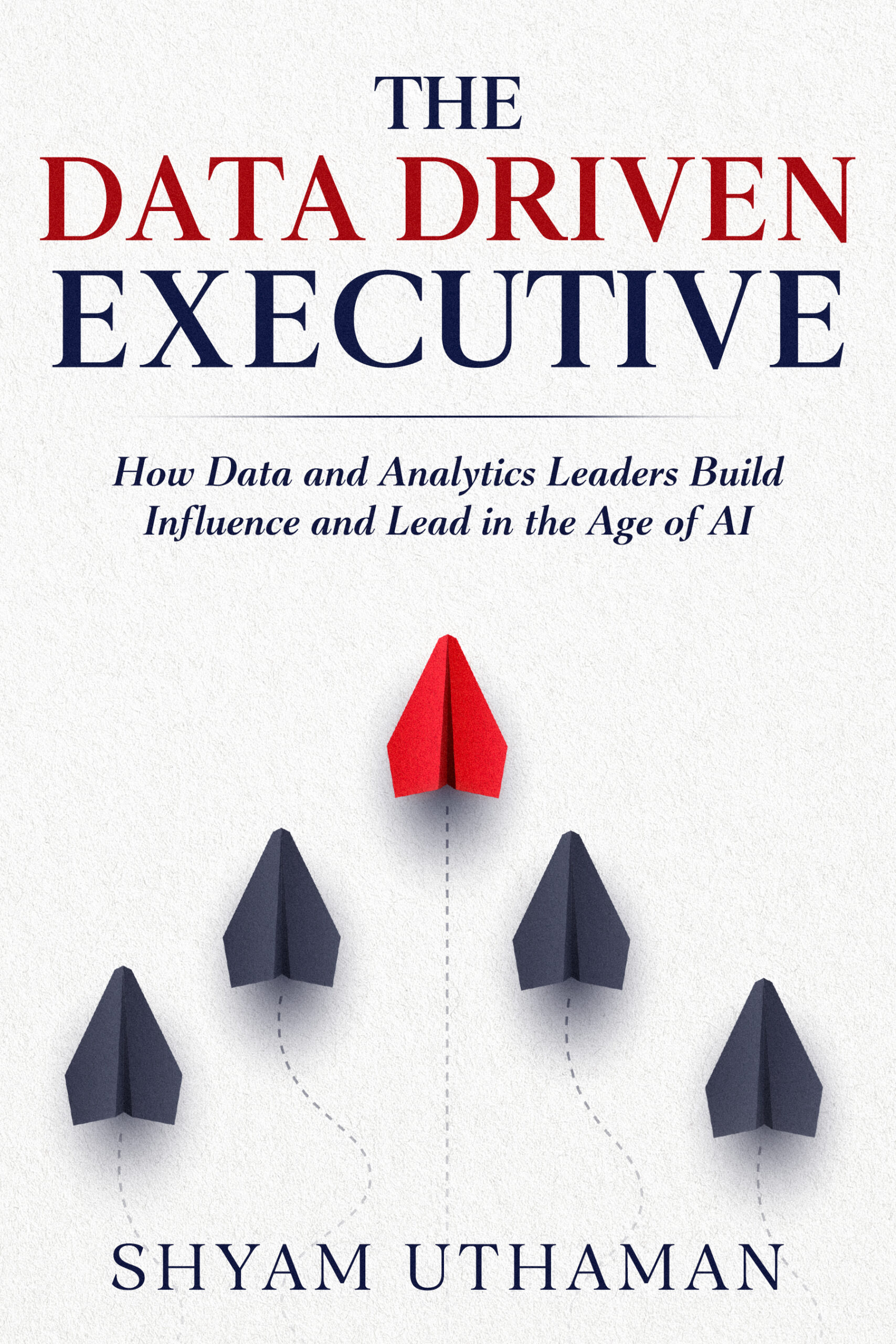
This is one piece of building a data organization that actually delivers. For the complete hiring framework, including org design by team size and interview questions for the roles nobody else screens for, see The Data-Driven Executive: How Data and Analytics Leaders Build Influence and Lead in the Age of AI. For the full execution playbook on structuring a team around a real AI initiative, see AI to ROI for Business Leaders: Turn Artificial Intelligence into Real Results. It covers decision domains and avoiding the hero trap in detail.